Scott International Procedures
The requirement for a separate Oceanic Clearance in the NAT HLA is ending; operators send an RCL reflecting the filed route but receive no clearance in return.

UPDATED! 12042024
It's happening. The requirement for a separate Oceanic Clearance in the NAT HLA is ending. Significant technological advancements in Communication, Navigation, and Surveillance made this possible.
As an executive summary, the operator will send the Request for Clearance (RCL) that reflects the FMS loaded filed route but will not receive an Oceanic Clearance in return. Instead, ATC will use the data provided in the RCL to gather the information needed to deconflict and sequence traffic. If a reroute is required, an FMS loadable routing will be uploaded to the aircraft or received via Voice. Review the details below:
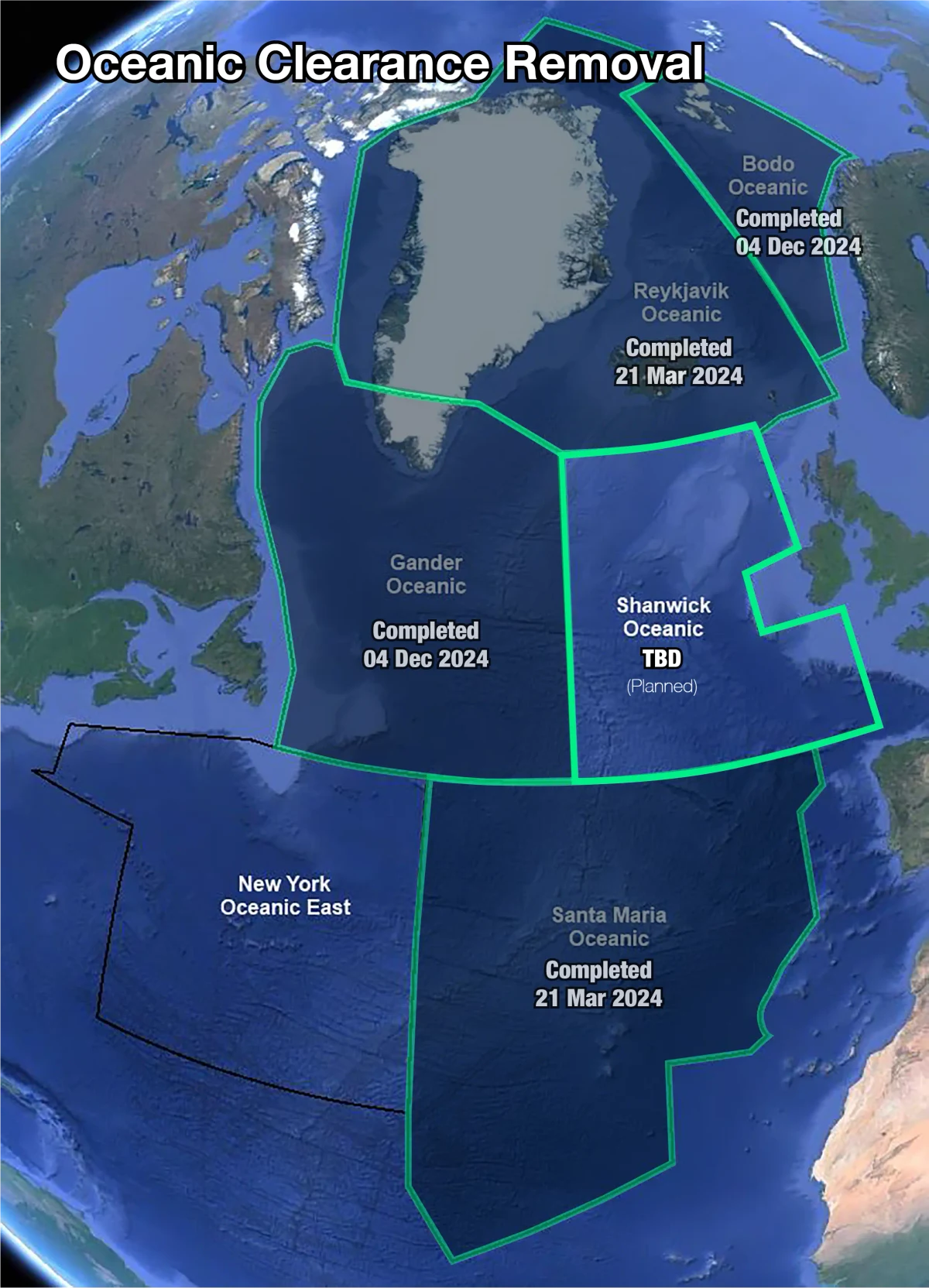
Implementation Dates/Status (Subject to Changes - Check NOTAMS):
Be sure to familiarize yourself with the new procedure for requesting clearance, as outlined in the NAT OPS Bulletin 2023_001.
It must contain the following elements:
Additional details can be found in the following:
REFERENCED REGULATIONS
FAA AC 91-70B
NAT Doc 007 Ver 2026.1
ICAO Doc 4444 PANS-ATM
ICAO Annex 11
NAT OPS Bulletin 2025-3
AUTHOR
The Scott IPC instructor team: retired corporate chief pilots, FAA procedures and safety personnel, and former military aviators who teach international procedures.
STAY CURRENT
Regulatory changes, procedure updates, and instructor insights. About one email a month. No marketing fluff.
you@flightdepartment.com
SubscribeWe don't share email addresses. Unsubscribe at any time.